


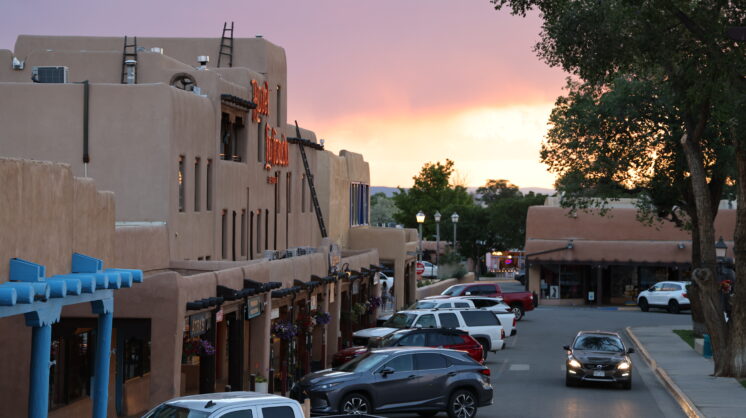
One of America’s quintessential mountain towns, there’s a lot more to Taos than black diamond slopes and après-ski luxury. Despite its small size and population, the northern New Mexico town is as multifaceted as its high-desert climate. From art to architecture, that variety is woven into the cultural DNA of a town founded as a Spanish village in 1615, and whose roots stem centuries earlier, when the Tiwa peoples built mighty pueblo structures that still stand today.
Nowadays, travelers are still drawn to the Sangre de Cristo Mountains, transfixed by its natural and architectural beauty, just as the earliest explorers were. That enduring allure manifests in ways old and new. It’s in the New Mexican cuisine, served up in adobe hotels, and on the snow-swept slopes. It’s in the vastness of the Rio Grande Gorge, the infamy of its haunted residences and the timeless history preserved in the pueblo. A scenic day’s drive from OKC, it’s a worthwhile destination no matter the season. It’s time for a new take on Taos.
Where to stay
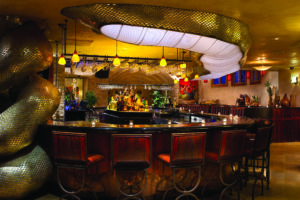
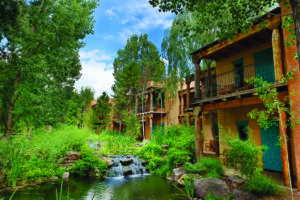
Tucked away on the edge of historic Taos Plaza downtown, El Monte Sagrado is the kind of immersive retreat that feels like a serene sanctuary. Nestled on manicured grounds, flanked by waterfalls and ponds, the adobe-style property boasts in-room fireplaces and bathtubs, a spa, complimentary yoga classes and an enormous indoor saltwater pool, surrounded by enough lush vegetation to fill a greenhouse. Don’t miss Anaconda Bar, where guests can share green chile cheeseburgers under a replica anaconda on the ceiling.
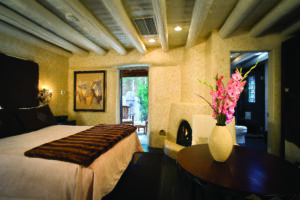

Nearby, Hotel Willa is a new design-forward boutique, reimagining a ’60s-era adobe-style motor lodge with earth-toned minimalism and terra cotta walls, an artist-in-residency program and rooms with kiva fireplaces and private patios. For more space, a former adobe home has been converted into suites, and the on-site restaurant, Juliette, pays homage to chef Johnny Ortiz-Concha’s mother, who grew up near the present-day hotel. The eclectic menu features everything from fresh cheese dumplings with oyster mushrooms and turnips to lamb ribs with winter squash and piñon. The hotel also features an outdoor pool and hot tub.
Where to play
Indoors and out, all year long, entertainment—and edutainment—takes many forms in Taos.
Come winter, Taos Ski Valley is the town’s bread and butter, famed for its 300 inches of annual snowfall, and more than 300 days of sunshine. Clocking in at nearly 1,300 acres and 110 trails ranging from beginner to expert, it’s a something-for-everyone-style destination, set in the majestic Sangre de Cristos, with a bustling ski village at the base.
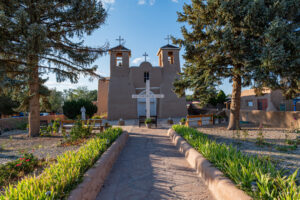
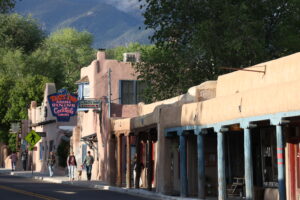
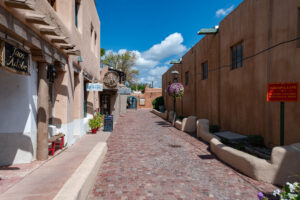
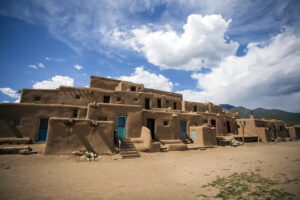
Considering the magnitude of the winter wonderland in the ski valley, it’s hard to fathom that the Taos Pueblo—a village of multi-story adobe homes dating back over 1,000 years—is mere miles away. A UNESCO World Heritage Site, it’s like stepping far back in time, with accessible sites like the San Geronimo Chapel and shops selling pottery, jewelry and other wares. Nearby, Taos Plaza has its own history to share. In the heart of downtown, this is where the first settlers and artisans set up shop, following a land grant from the King of Spain in 1796. Once comprised of houses surrounded by a barrier wall, the plaza touts shops, galleries, farmers markets and events. A block away, visitors will find even more storefronts at the John Dunn Shops, a shaded pedestrian shopping mall home to Common Thread Textiles, Café Sagrado, Mooncat Fiber and more.

Another great outing is the Carson Home and Museum. Built in 1825, it was once the home of the legendary frontiersman Kit Carson, until his death in 1868. The museum preserves the rich history of the American Southwest, including the Native tribes that far pre-dated European settlement. It’s also allegedly haunted.
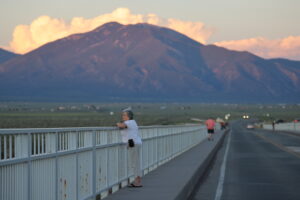
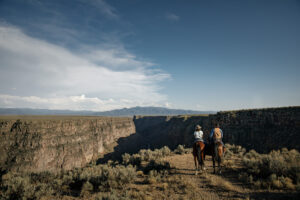
Outdoors, adventurers have their share of thrills, from fly fishing expeditions and guided horseback rides to hot air balloons and llama hikes. Be sure to stop on the Rio Grande Gorge Bridge, the fifth highest in the U.S. At 650 feet, the views are staggering, and there’s a trail that hugs the canyon’s edge, on the west side of the bridge, for those brave enough to take a closer look.
Where to eat and drink
From traditional New Mexican cuisine to modern menus and historic bars, the dining scene in Taos is as deep as the gorge.
Start with house-roasted coffee—and espresso drinks, like white chocolate-macadamia-cherry lattes—at The Coffee Apothecary. Right next door, Bread Club Taos is a sunny cafe slinging pastries and breads, including blue cornmeal sourdough. And in the same parking lot, Mary Jane’s Home Cooking makes some of the best breakfast burritos in town.
Later, have dinner at The Love Apple, specializing in local and organic New Mexican cooking. Located in a former chapel from the 1800s, the space is as storied as the menu, which changes regularly. Examples include homemade tamales with Oaxacan-style mole; grilled trout wrapped in corn husks with lime butter; and fried avocado tacos with coconut creamed corn.

A buzzy newcomer, SUCHNESS dining room is the handiwork of chef Kevin Sousa, who almost single-handedly mans the kitchen while his wife Meg runs the beverage program. The ever-changing, always-riveting menu might include smoked beets with mixed berries and goat gouda; pork belly with koji-roasted cabbage and mole poblano; and rigatoni with smoked carrot bolognese.
And for a nightcap with a side of history, follow the neon sign to the Adobe Bar. Housed inside the Taos Inn, a former residence-turned hotel, the cozy Pueblo space is renowned for its margaritas, and its nickname as the “Living Room of Taos.” Live music plays nightly, and you’ll also find New Mexican bar bites like green chile pork stew, loaded nachos and green chile smash burgers.