
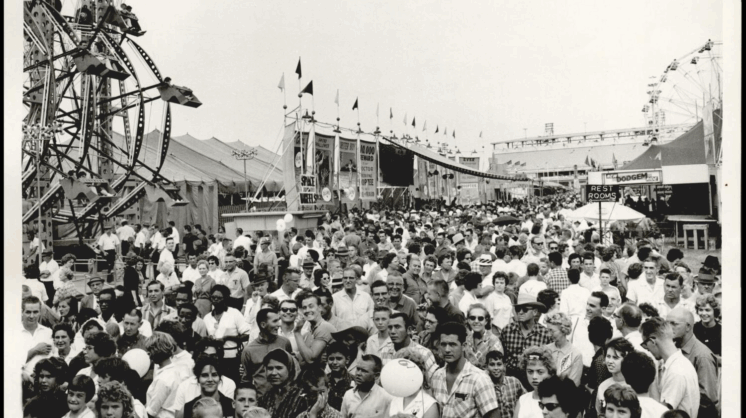
Before statehood, before cars and before the ever-popular amusement rides, fairs were being held all over the country, including Oklahoma Territory. The first in Oklahoma City occurred five months after the Land Run in 1889, and had a focus on agriculture.
Interest in these simple events continued to grow, but the soon-to-be state was ready for something more substantial, more enticing. The first ever Oklahoma State Fair was in early October, a month before official statehood day on Nov. 16, 1907.
Land purchased by civic leader Henry Overholser became home for the fairgrounds at NE 10th Street and Eastern Avenue, where a racetrack, music hall, large exposition hall and buildings would soon appear. It’s now the site of Douglass High School.
Early fairgoers enjoyed crop and livestock competitions, along with carnival attractions; agriculture, farming and ranching exhibits; vaudeville acts; a midway; and a new half-mile horse racetrack with a grandstand that could accommodate up to 15,000 fans. Horse racing events were always well-attended, but in 1913 the state legislature banned gambling on those races. Fairgoers turned their attention to car races, hot air balloon rides, air shows, more carnival rides that elicited thrills and shrills and the new Livestock and Horse Show Pavilion.
The fair continued to be popular, even during World War II. It provided a welcome distraction and was an opportunity to raise morale, with exhibits of armed forces equipment and military bravery. During wartime, the fair closed just once in 1945.
But relocation soon became a reality. The city purchased 440 acres near NW 10th Street and May Avenue with plans for a bigger and better fairgrounds. Oklahoma City was growing. More space was needed. People were excited about the new location and what the fair would offer; its opening in 1954 attracted 416,000 visitors in nine days.
Several buildings were constructed in the 1960s and ’70s, including the Fairgrounds Arena which proved a popular venue for basketball and hockey games and rodeos. In 1974, country singer Red Steagall discovered Oklahoma native Reba McEntire when she performed the national anthem at the arena during the National Finals Rodeo. In 1975 the fair’s attendance exceeded one million.
Equine events continue to be big draws, but many of the fairgrounds’ memorable landmarks and rides have been removed due to deteriorating conditions caused by weather and age, financial considerations or vendor decisions.
The 330-foot-tall Arrows to Atoms Space Tower, also known as the Space Needle, is gone, along with the monorail, B-52 Plaza, Spirit of ’76 Arch, oil derrick clock tower and the Goodholm Mansion. The State Fair Speedway is now a paved parking lot.
There was a time, too, when going to the fair was a reason to get dressed up. Men often wore suits or sportcoats and women slipped into dresses and heels. Today, the emphasis is more on comfort and staying cool.
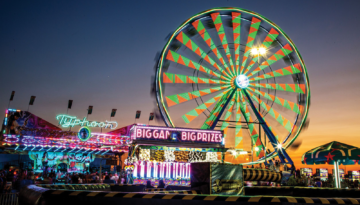
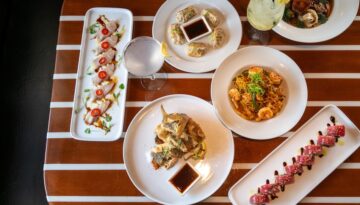
This year’s Oklahoma State Fair—the name changed from the State Fair of Oklahoma in 2001—is Sept. 11-21, with a theme of “Eat Ride Repeat.” Concerts include Herman’s Hermits starring Peter Noone, a tribute to Elvis, Trace Adkins, Sister Sledge and Joe Nichols. The Grand Marshal is chef and television personality Sandra Lee.
Once-popular landmarks may be long gone, but excitement for the fair and all it offers never seems to disappear.