


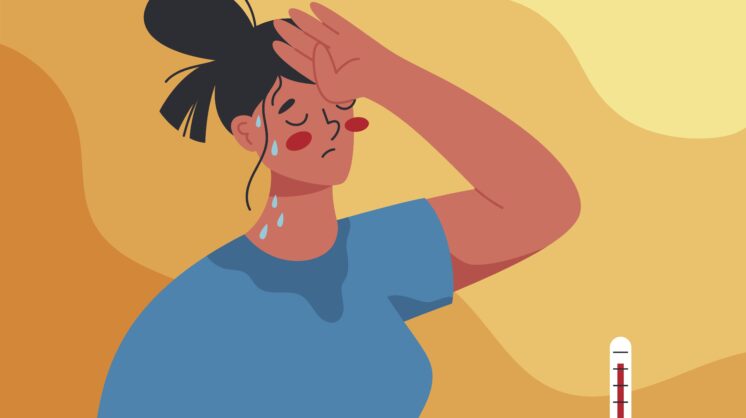
August in Oklahoma is hot. Between the warm summer heat and high humidity, Oklahoma’s heat index in August is well over 100 degrees almost every day. But as kids gear up to go back to school, August is also when many Oklahomans enjoy fresh air and lots of time outside. We spoke with emergency medicine physician Giselle Zagari, M.D., on how to safely enjoy these last summer days in the sun.
With 20 years of experience in emergency departments in both Arizona and Oklahoma City, Zagari has seen her share of heat-related illness. “We do not actually see heat stroke as often,” she said. “Usually patients come in when they are in the heat exhaustion phase.”
Basically, heat exhaustion occurs when our bodies overheat and we lose too much water and salt from excessive sweating. “Heat exhaustion is the level below heat stroke,” Zagari said. “It is when you are thirsty, sweating and your heart rate is up. You may feel lightheaded or faint, nauseous or begin vomiting. These patients are conscious and aware that they are hot and feeling dehydrated.” In Oklahoma, heat exhaustion can occur at a lower temperature because of the high humidity.
If you begin to feel any symptoms of heat exhaustion, the first thing to do would be to get out of the heat and seek shelter. “Try to get water in your body and cool the body off by external means. Place wet towels on the pulse points like the armpits, groin and the back of the neck and sit in front of a fan,” Zagari advised. Should you begin to feel confused or lose consciousness, seek emergency treatment as soon as possible.
If the body’s temperature rises above 104 degrees, you may experience heat stroke, which is much more serious. It includes an altered mental status and the inability for the body to regulate temperature, so you are no longer sweating. Heat stroke may damage the brain, heart, kidneys and muscles. Zagari noted she does not see heat stroke as often, because usually individuals are seeking help by the time they are experiencing heat exhaustion. “Heat stroke tends to occur with people who are intoxicated or under the influence of substances, or do not have the ability to seek help, like in the unhoused population,” she said.
If you have plans to be outdoors in the heat, there are ways to prevent heat-related illness. Avoid excessive alcohol, as it is a diuretic and also a vasodilator, so you will lose more heat while drinking. Zagari also recommended wearing proper footwear, especially if you are going to be standing on concrete. Plan any physical activity, like yardwork or outdoor exercise, in the morning or evening when it is cooler, and wear lightweight, loose clothing. The most important thing is staying hydrated by drinking plenty of water and electrolytes consistently throughout the day.
Protect Your Pets
Make sure your pets are safe in the heat, too! Keep your animals indoors when possible and provide access to fresh, cool water and shade when they are outside. Walks should be in the morning or evening when it is cooler out, and avoid letting them stroll on the concrete for long periods of time. Provide cooling mats and elevated beds, and reward that very good pup with a frozen treat.