

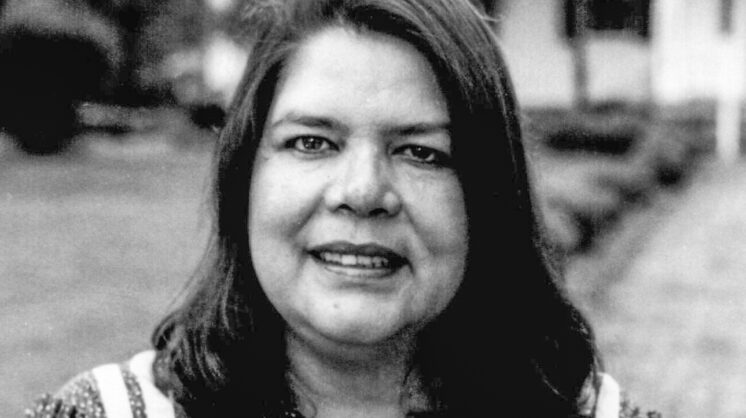
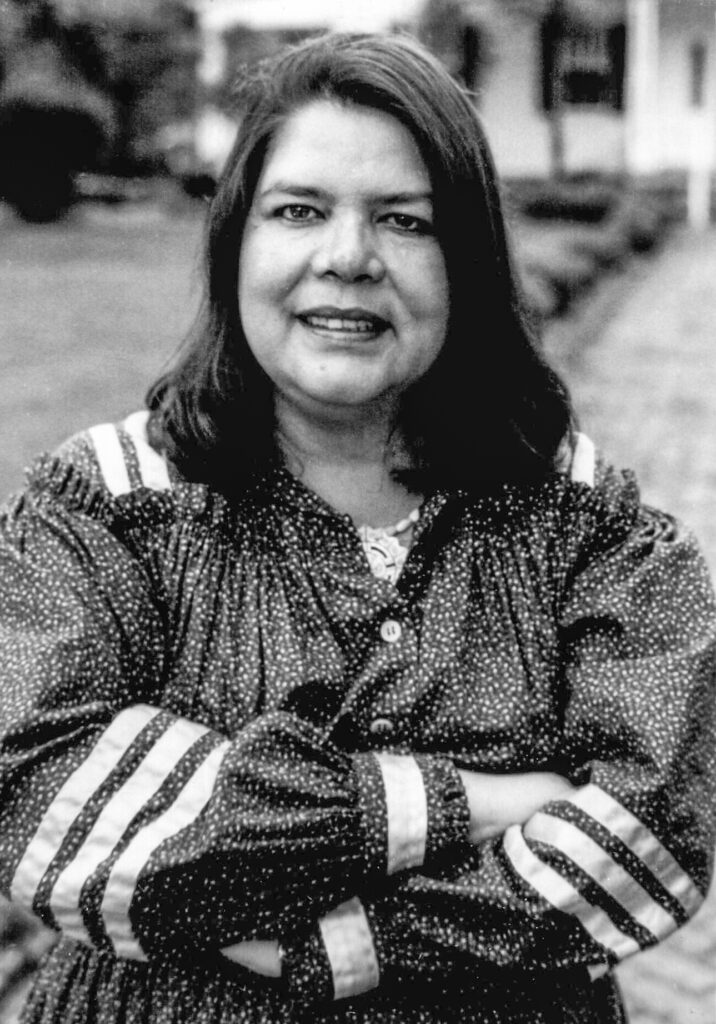
Wilma Mankiller experienced many firsts during her life, including being the first woman elected principal chief of the Cherokee Nation. She also received national recognition and honors, and was an inspiration not only to young Cherokee women but to women everywhere.
She was born in Tahlequah in 1945 and grew up in Mankiller Flats. The name Mankiller was adopted by a family ancestor, and often refers to a traditional Cherokee military rank.
At age 11, her family moved to San Francisco as part of the Bureau of Indian Affairs relocation plan; her father was told his family would have a better life in California. The family boarded a train in Stilwell in the fall of 1957. As it rolled down the tracks, they could only imagine what was waiting, and how different it would be from their rural community with unpaved roads, and no indoor plumbing or electricity. Two days later they arrived in the Tenderloin District, an area known for prostitution, gambling and burlesque houses. The family settled into a tough urban housing project.
It was Mankiller’s introduction to a large city. She had never heard sirens, and thought they were sounds from an animal. She had never seen or been in an elevator. But she finished high school, got a job as a clerk, married and had two daughters.
In 1969, her life started moving in another direction when Native Americans of different tribes occupied an abandoned prison on Alcatraz Island in the San Francisco Bay. Their goal was to bring attention to the U.S. government’s injustice. Mankiller and her family helped deliver supplies on the island, but she wanted to do more.
That’s when she realized that the rest of the world needed to know that Native Americans had rights too. She was changing in many ways. She took community college courses, turned her attention to social work and became more independent, which caused marital issues. She divorced her husband in 1974, and as a single mother turned her attention to social work.
Soon after, she returned to Oklahoma and became community development director for the Cherokee Nation. It was the beginning of a storied career.
In 1983, she was elected the first female deputy chief of the Cherokee Nation and president of the tribal council. Two years later when chief Ross Swimmer resigned, she became the first female Cherokee chief and in 1987 was elected the first female principal chief of the Cherokee Nation. During her decade-long leadership, tribal enrollment tripled to 170,000 and employment doubled. Infant mortality declined and educational achievement increased. She focused on new housing, health centers and children’s programs.
She became a national role model even after she left office in 1995 as she continued to be vocal worldwide for Native people, women and social injustice. In 1993, she and writer Michael Wallis told her story in the book Mankiller: A Chief and Her People.
She was inducted into the National Women’s Hall of Fame in New York, the Oklahoma Women’s Hall of Fame and the Oklahoma Hall of Fame, and was awarded the Presidential Medal of Freedom by President Bill Clinton. On June 6, 2022, the Wilma Mankiller Quarter was introduced at a public event in Tahlequah. It was the third entry in the American Women Quarters Program.
She died on April 6, 2010, of pancreatic cancer. Throughout her life, she exemplified her last name—which also refers to strength and leadership, a keeper of the village or one who oversees the well-being of the community.
That was Wilma Mankiller.