

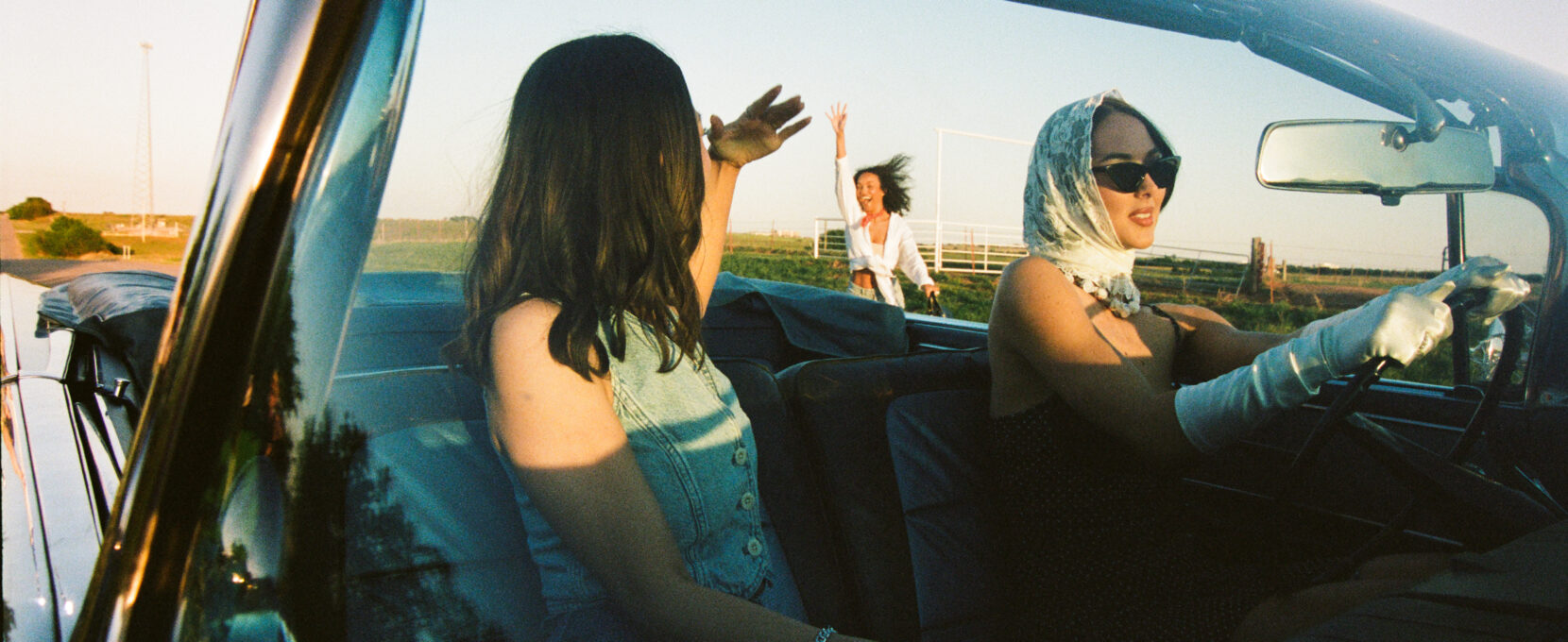
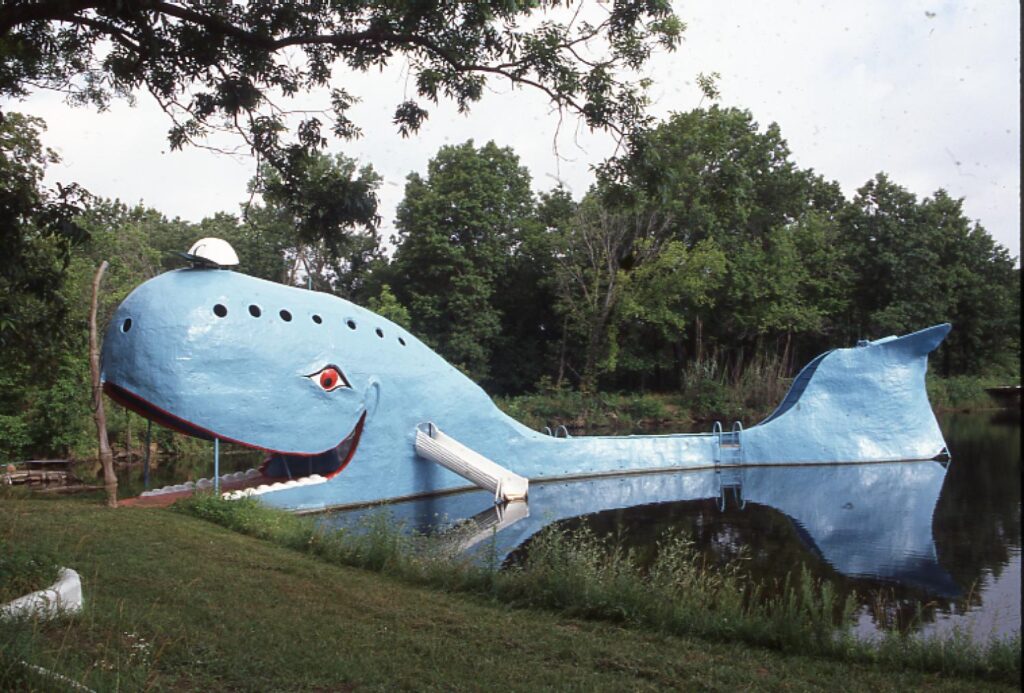
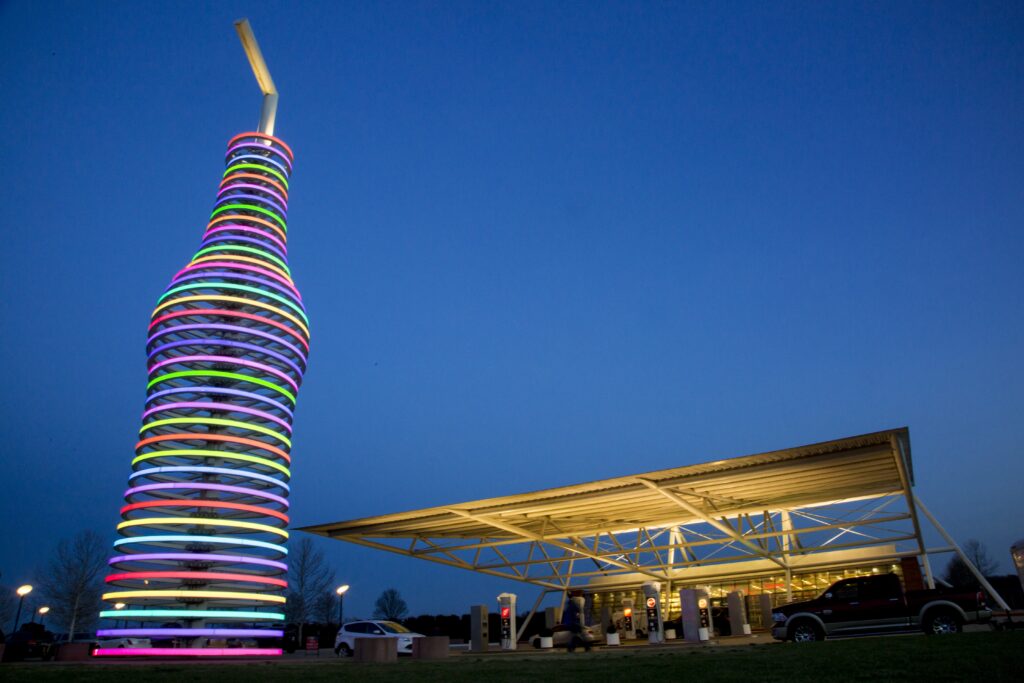
There’s something otherworldly about driving off into an Oklahoma sunset. As the wind sweeps down the plains, rippling through a sea of fragrant prairie grass, the sun looks almost volcanic against the horizon—practically daring you to venture farther. This is a route that weaves from the Ozark Highlands through the forested Crosstimbers, and into the gypsum hills, red rock canyons and rolling hills of western Oklahoma. Along the way, oil wells and pecan groves rise alongside towering Muffler Men, super-sized soda bottles and even a blue whale.
Equal parts kitsch and sweeping beauty, this drive is a journey—through Oklahoma and beyond—that’s become legend, forever defining the all-American road trip. Long distinguished by roadside picnics and classic cars, with travelers as free-spirited as tumbleweeds and Cadillacs as blue as the Oklahoma sky, it’s an adventure that helped shape a nation. And here in Oklahoma, as Route 66 celebrates its centennial, the heart of America’s Mother Road beckons.
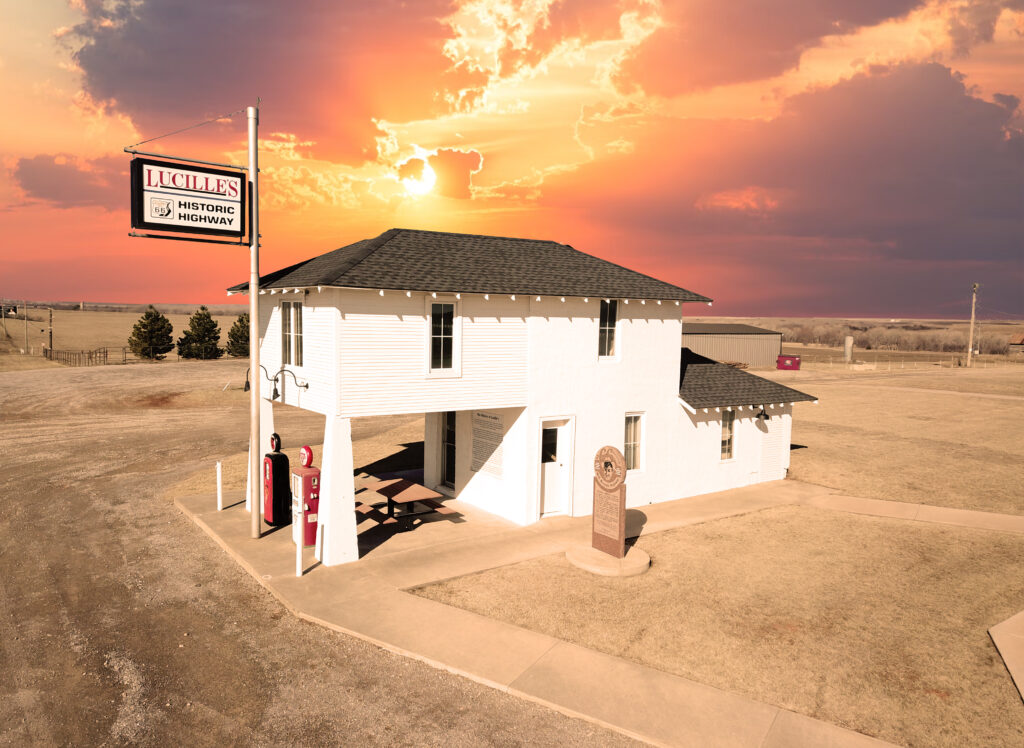
For 100 years, both travelers and transplants have criss-crossed Oklahoma on the iconic byway. Established in 1926 at the onset of the U.S. Highway System, America’s “Main Street” stretches 2,448 miles between Chicago and Santa Monica, linking small towns with big cities, mountains with ocean and people from all walks of life. Home to more driveable miles than any other state (over 400), including 51 miles in Oklahoma City and 28 in Tulsa, the official “Capital of Route 66,” Oklahoma represents an especially significant stretch of the Mother Road as she celebrates her centennial.
In its earliest days, Route 66 was a rockier road, traveled by westward migrants, adventurous travelers and farmers. A century later, much has changed, but the heart of Route 66—a timeless conduit of opportunity and adventure—remains as pure as it did in 1926. Although Route 66 was decommissioned from the U.S. Highway System in 1985, bypassed by speedier interstates, America’s most famed road is now its most iconic detour. It’s paved now, and some of the Cadillacs are nose-down in Amarillo, but the spirit it represents endures.
As countless travelers have done, I first arrived in Oklahoma City on Route 66. After leaving Chicago in an RV, drawn to that vast horizon of opportunity, I never imagined my first stop would be the same as my last. While staying at Twin Fountains RV Resort in OKC, ironically about a mile from where I live now, I dined at Cattlemen’s Steakhouse and explored the wonders of the West at the National Cowboy & Western Heritage Museum. I had drinks at Ponyboy, under the neon glow of the landmark Tower Theatre, and I marveled at gold domes and round barns. I even went dancing on 39th Street, where rainbow flags adorn the only gayborhood on Route 66.
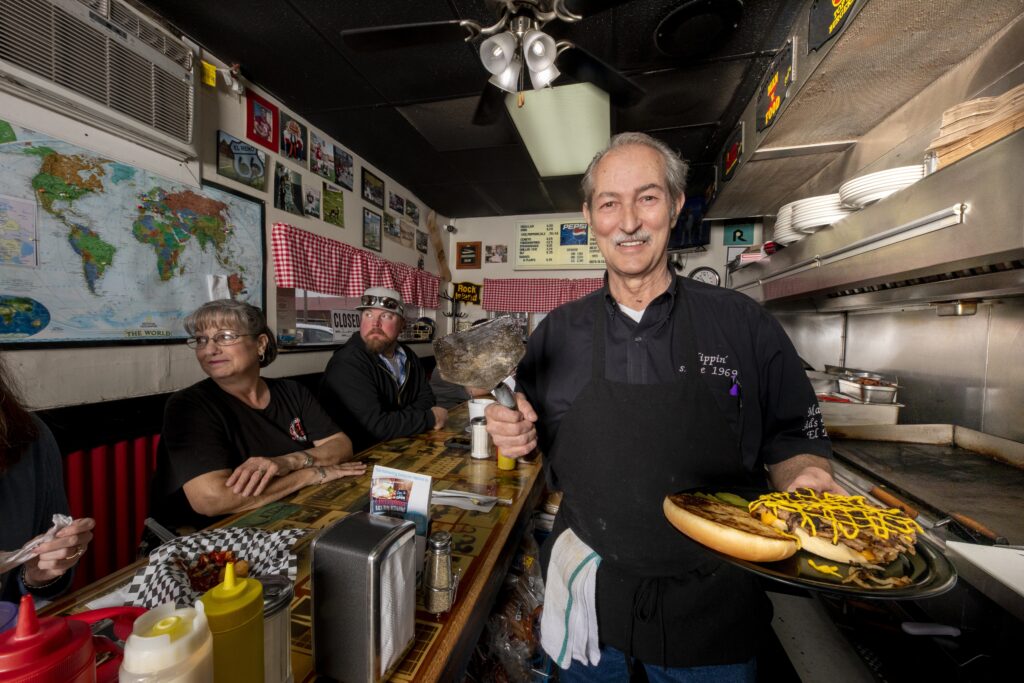
There was something special here, made all the more entrancing by its Route 66 vantage point, that kept me coming back. And in 2020, after returning to OKC on the same bygone highway, I stayed. That’s the allure of the open road, and the intimate connections that Route 66 affords, whether it’s Oklahoma, Missouri, New Mexico or any of the eight states it intersects. By skipping the interstate and taking the slower road, pausing for photos with the Golden Driller or eating onion burgers in El Reno, you get a real sense of place, and an authentic sense of awe. It’s true along the entire route, from the World’s Largest Catsup Bottle in Illinois and the Pueblo Deco KiMo Theatre in Albuquerque to the boulder-sized logs—twinkling like fossilized gems in the sun—at Arizona’s Petrified Forest National Park.
In Oklahoma, millions of travelers come from across the globe to experience the “Heart of Route 66,” where the subtle beauty of the detour sinks in and stays with you. Today, the drive looks different than it did 100 years ago; it’s quieter and slower, lined with motor courts, car museums and space cowboys. But the beauty is in the enduring legacy of it all, and how, as it did me, Route 66 inspires wanderers to appreciate the subtler side of American travel.
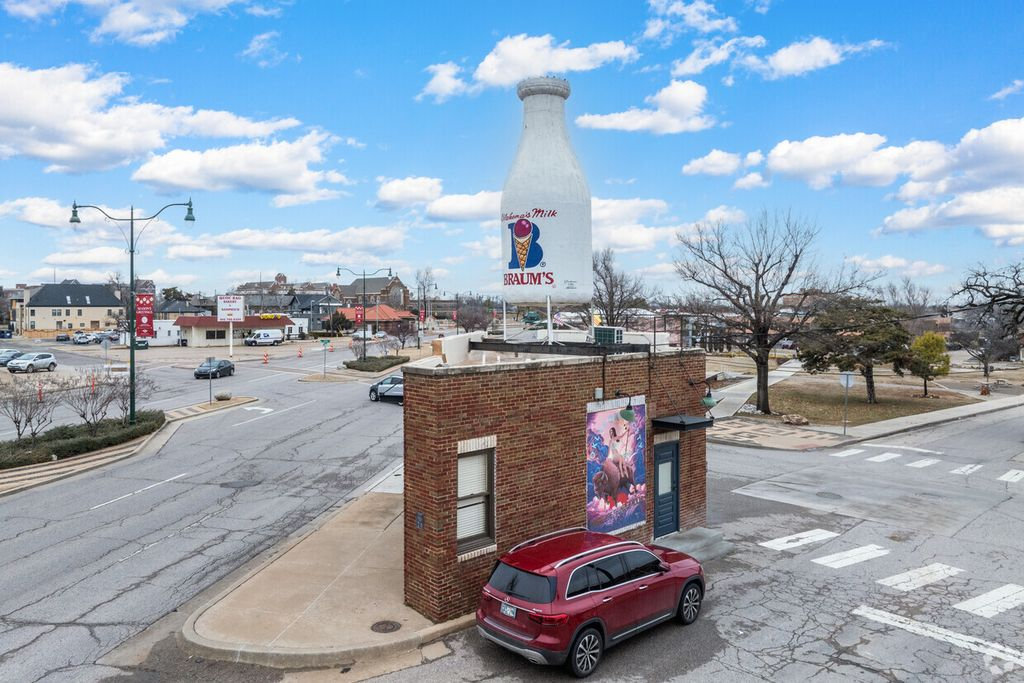
The legend lives on as Oklahoma, along with other states on the route, celebrates the centennial all year long. Events include a Heartland Cruise Car Show in Weatherford, Stroud’s Historic Route 66 Wine & Food Festival and Tulsa’s Route 66 Capital Cruise, while evergreen attractions include the Blue Whale of Catoosa, Pops 66 Soda Ranch and Ed Galloway’s Totem Pole Park. In OKC, where Route 66 traverses neighborhoods like Uptown 23rd and the Adventure District, stops run the gamut from mammoth milk bottles to America’s only state capitol flanked by active oil wells.
A drive on Route 66, whether for 2,448 miles or 24, remains a singular experience rooted in nostalgia and Americana. One hundred years later, it’s a drive that feels as visceral as its glory days, teeming with roadside treasures and memories found only on detours. And even 100 years later, there’s never been a better time to chase that sunset.