


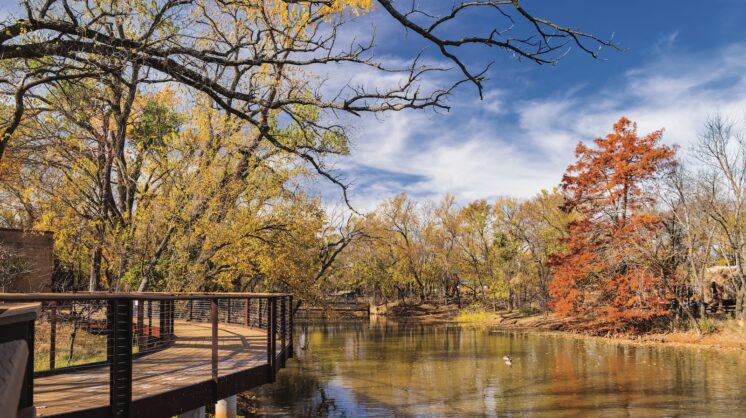
Oklahoma is covered with thousands of miles of hiking trails, including over 300 family-friendly trails and 77 wheelchair-friendly trails with accessibility guidance. No matter what you’re looking for in a hike, there’s a path for everyone. Before you hit the trails, however, there are a few things to keep in mind for an enjoyable and safe trek.
Tip-top trails in Oklahoma:
- Martin Park Nature Center, Oklahoma City
For novice hikers, stay in the city and take advantage of educational programs and guided nature hikes provided by the nature center.
View this post on Instagram
- Robbers Cave State Park Trails, Wilburton
A favorite among avid hikers, this system offers around 12 miles of trails. Along the paths, you’ll see streams, a lake and unique rock formations. - McGee Creek Natural Scenic Recreation Area, Atoka
The park o ers more than 30 miles of trails within its system. These range from an easy, one-mile path to lengthier, more rocky and pine-covered trails. - Charon’s Garden Wilderness Area, Indiahoma
For seasoned hikers, this trail is located within the Wichita Mountain National Wildlife Refuge and is worth the drive if you’re up for a challenge. Hiking boots are a must. - Horsethief Springs Trail, Heavener
This is considered a demanding hike due to the trail’s steep grades and lengthy climbs up Winding Stair Mountain. Take a trip during the fall for gorgeous colors as a bonus.
View this post on Instagram
What to wear from head to toe:
Sunscreen: Before anything else, lather on a thick layer of sunscreen everywhere, including your face and lips. UV rays can penetrate clothing, so it’s important to have everything covered. Sunscreen is non-negotiable — no matter where you’re hiking and no matter the weather. You can also opt for clothing with an ultraviolet protective factor (UPF) for a sure-fire layer of protection.
Lightweight layers: Cotton and denim will absorb moisture and stick to your skin, so avoid these materials. A quick-dry gym shirt will do for the occasional hiker. If you want to invest in hiking shirts, they are usually made from polyester or Merino wool. These materials are moisture-wicking, breathable and quick-drying. Carrying a lightweight waterproof jacket or insulated layer is also recommended, considering Oklahoma’s ever-changing weather.
Long pants: This might seem counterintuitive considering the hot weather, but a lightweight pair of pants protects your skin from ticks and poison ivy. You’re also less likely to come out with scrapes and cuts from tall grass and branches.
Socks: High socks made of a fast-drying fabric like Merino wool will provide dry cushioning for your feet and prevent chafing, especially if you’re wearing higher, ankle-length boots.
Hiking boots: While a comfy pair of tennis shoes can get the job done, boots are recommended if you hike regularly. They provide traction in areas that are steep and prevent slipping. Investing in a pair of hiking boots also lowers the odds of spraining an ankle — they support your feet while trekking through rough and uneven ground.
Backpack: The size of your backpack should depend on the duration of your trip. If your trip is a few hours, a pack that holds between 10 and 25 liters should be enough to fit your water bottle, some snacks, sunscreen, first-aid kit, a small flashlight and a light jacket in case the weather shifts. For an overnight or weekend trip, you may pack between 20 to 35 liters. Your backpack should have supportive straps around the shoulders and torso, and 80% of the weight should sit on your waist. (Uneven weight distribution can lead to back pain.)
Safety tips:
- Always make a plan, especially if you’re navigating new terrain. Ask questions: Is there an emergency number for the park if something happens? Is there reliable cell service? Do I need to bring a portable phone charger?
- Always tell someone where you’re going. Draw up a plan and include your destination, starting point, route and anticipated start and finish times. If you’re going with a group, tell someone who’s not in the group. You can also take the extra step and ask to leave your plan with the park office if there is one.
- Avoid poison oak and poison ivy, which are common in Oklahoma — both have three leaflets to each stem. The state is also home to cottonmouths, copperheads and rattlesnakes — all venomous snake species. Stay on clear trails and watch where you’re stepping. If you have to walk through tall grass, this is where your ankle-length boots come in handy.
- Prevent heat exhaustion by timing your hikes. Avoid the blistering sun and head out in the early morning hours or late afternoon. Wear sunglasses and a hat to shade your face and neck from the sun, and stay well-hydrated. The National Park Service recommends drinking about half a liter to one liter per hour while active outdoors. It’s also recommended to take frequent breaks, preferably in the shade.